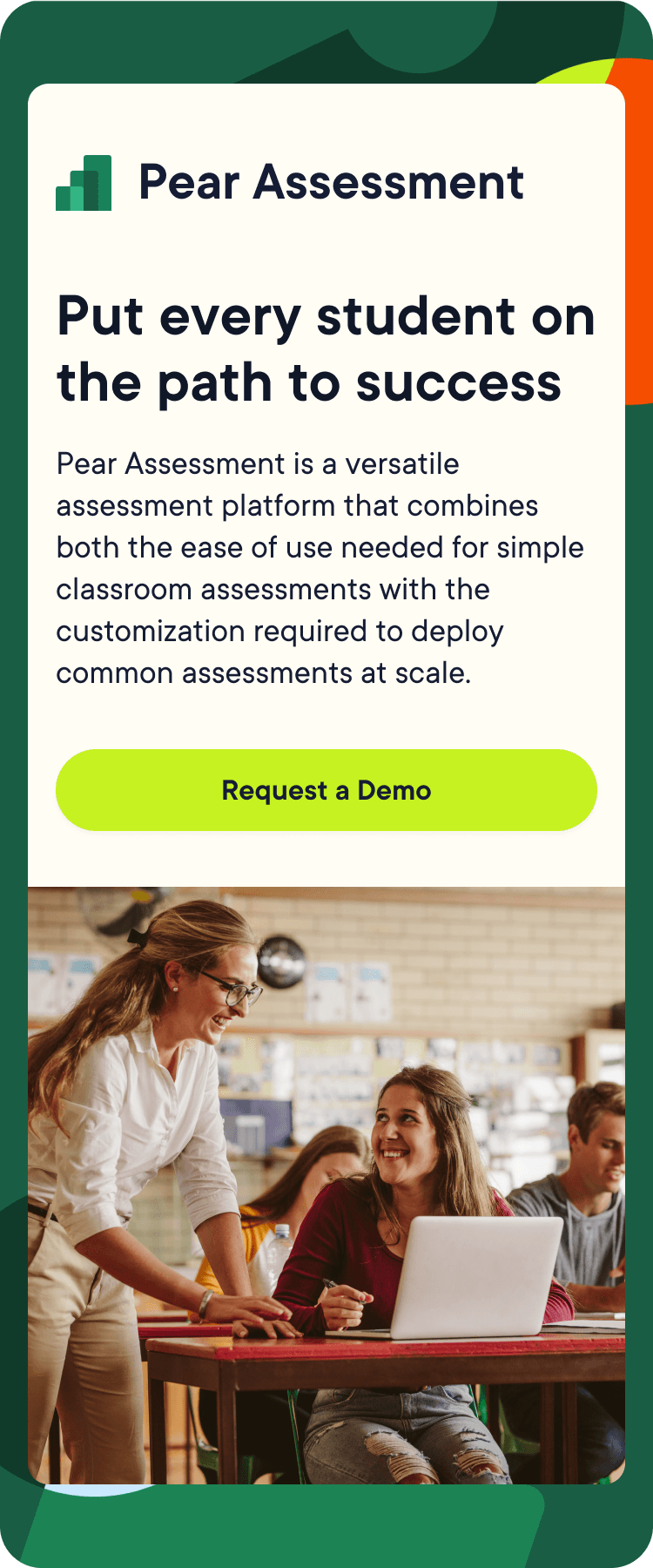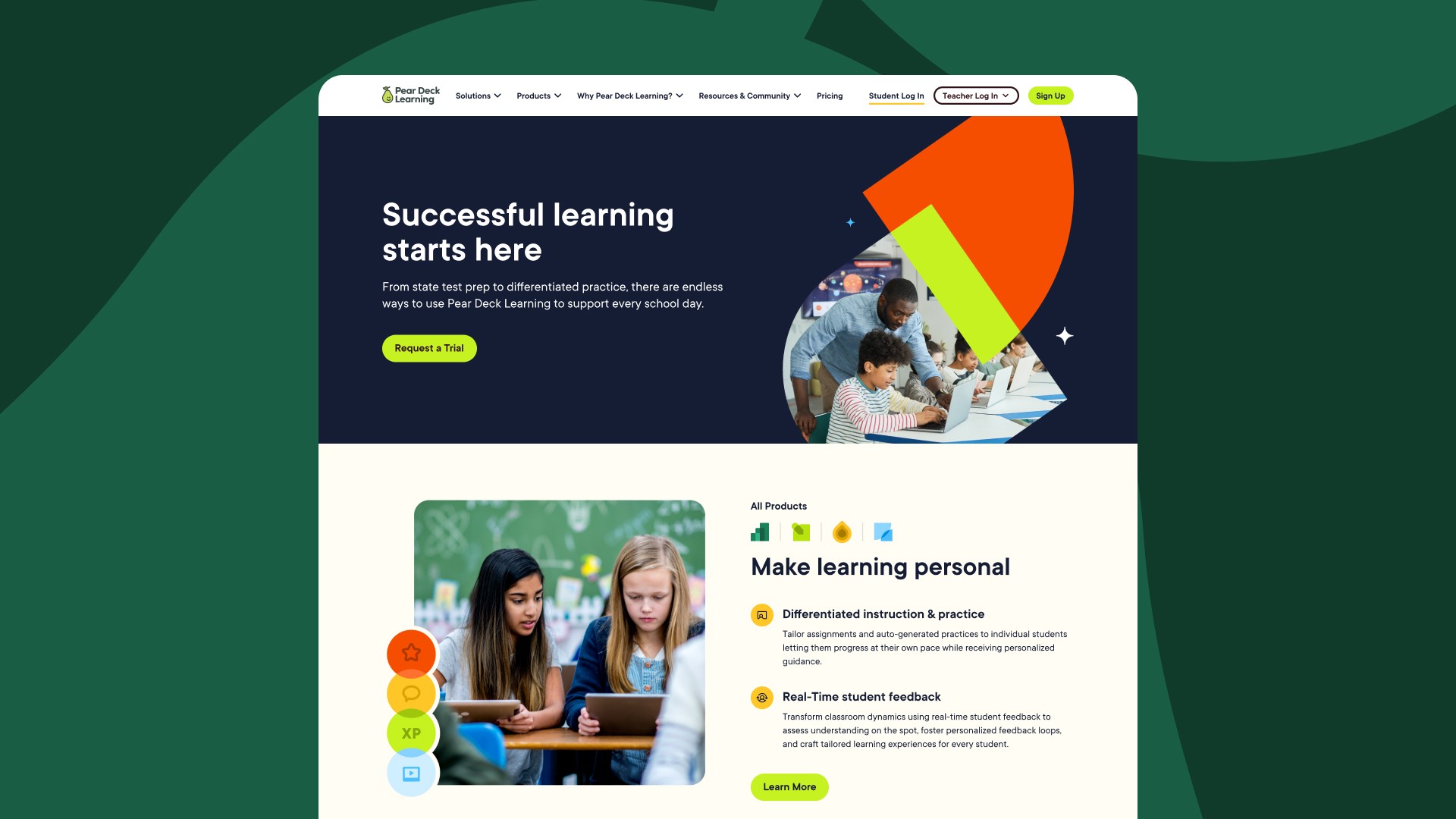
We helped build a single website for a new learning brand that would do the work of four distinct, previously disconnected ed-tech products with their own marketing sites, voice, and visual languages.
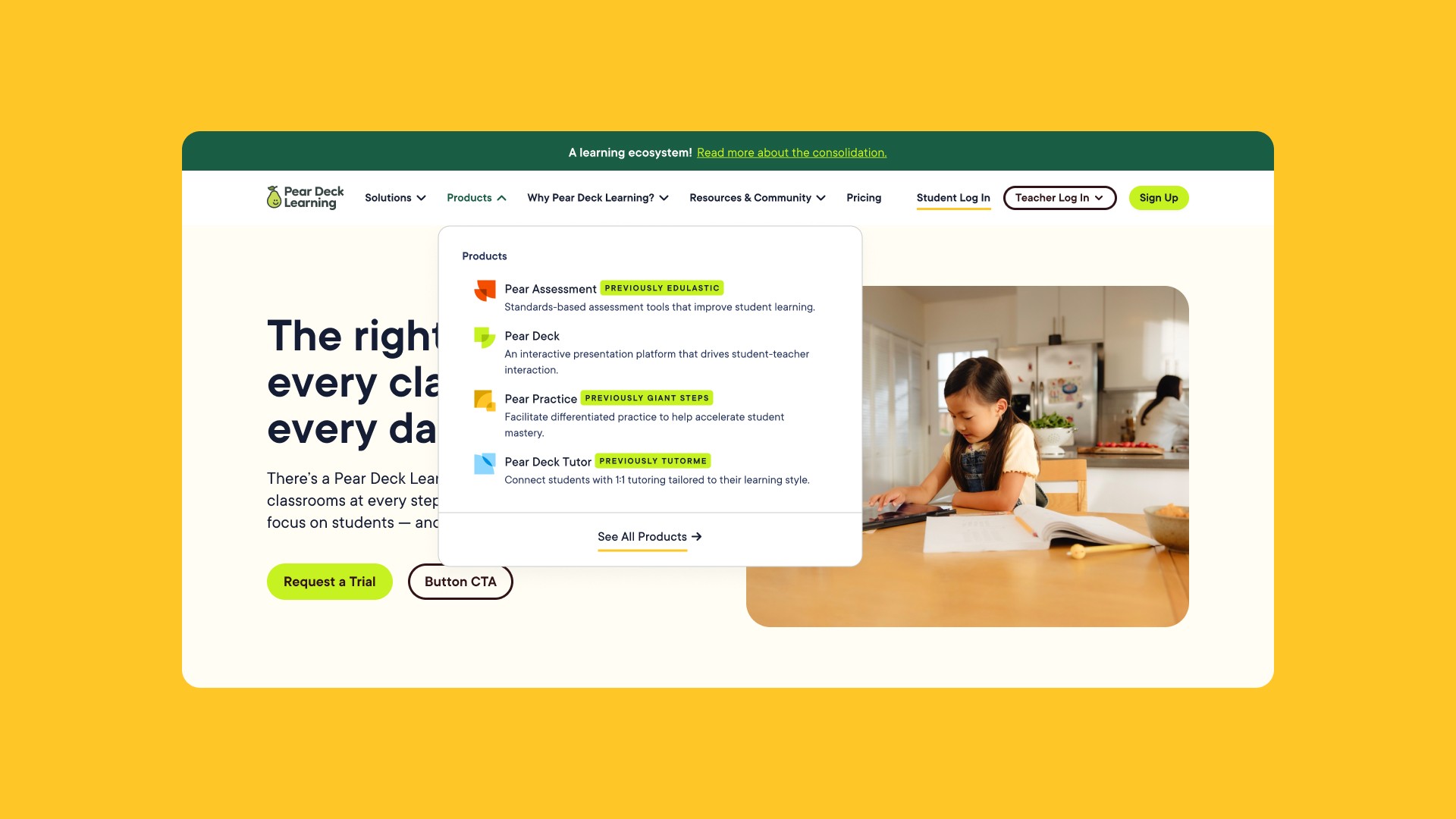
Rebranding them as Pear Assessment, Pear Practice, Pear Deck Tutor, and Pear Deck itself gave the system a name-level hierarchy that did half the IA work before a visitor reached the nav.
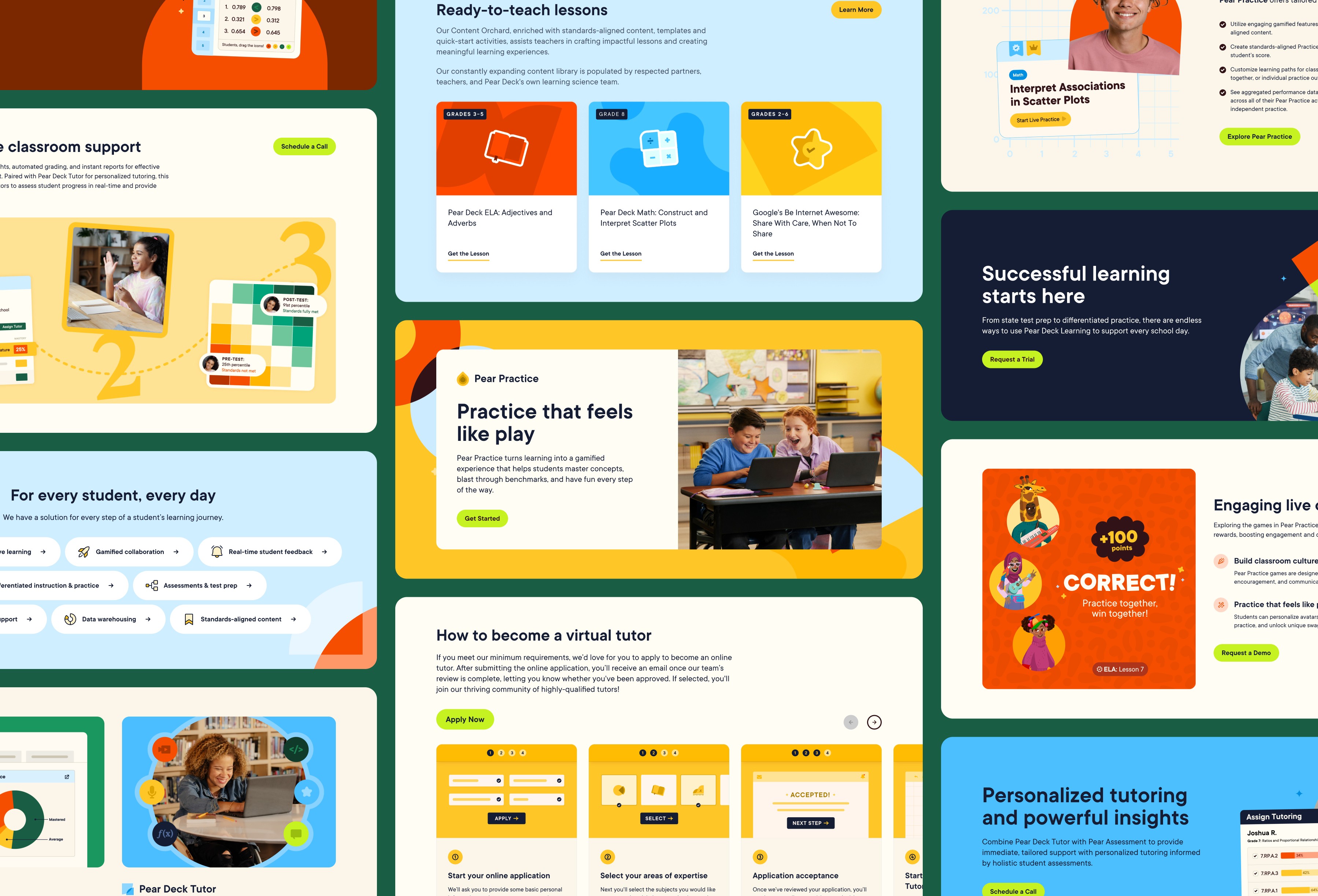
We kept the per-product visual identity — distinct color rulers (kiwi, papaya, chalkboard), distinct mascots, distinct logo marks — so that product pages still feel like products, not slots in a grid. The system gains portfolio legibility without losing product character.


Supporting multiple mental models
A current Pear Deck user just needs a login. An administrator evaluating the whole ecosystem arrives with a specific problem to solve, not a product name. Test prep. Student engagement. Dead practice time.
One navigation, two different behaviors.
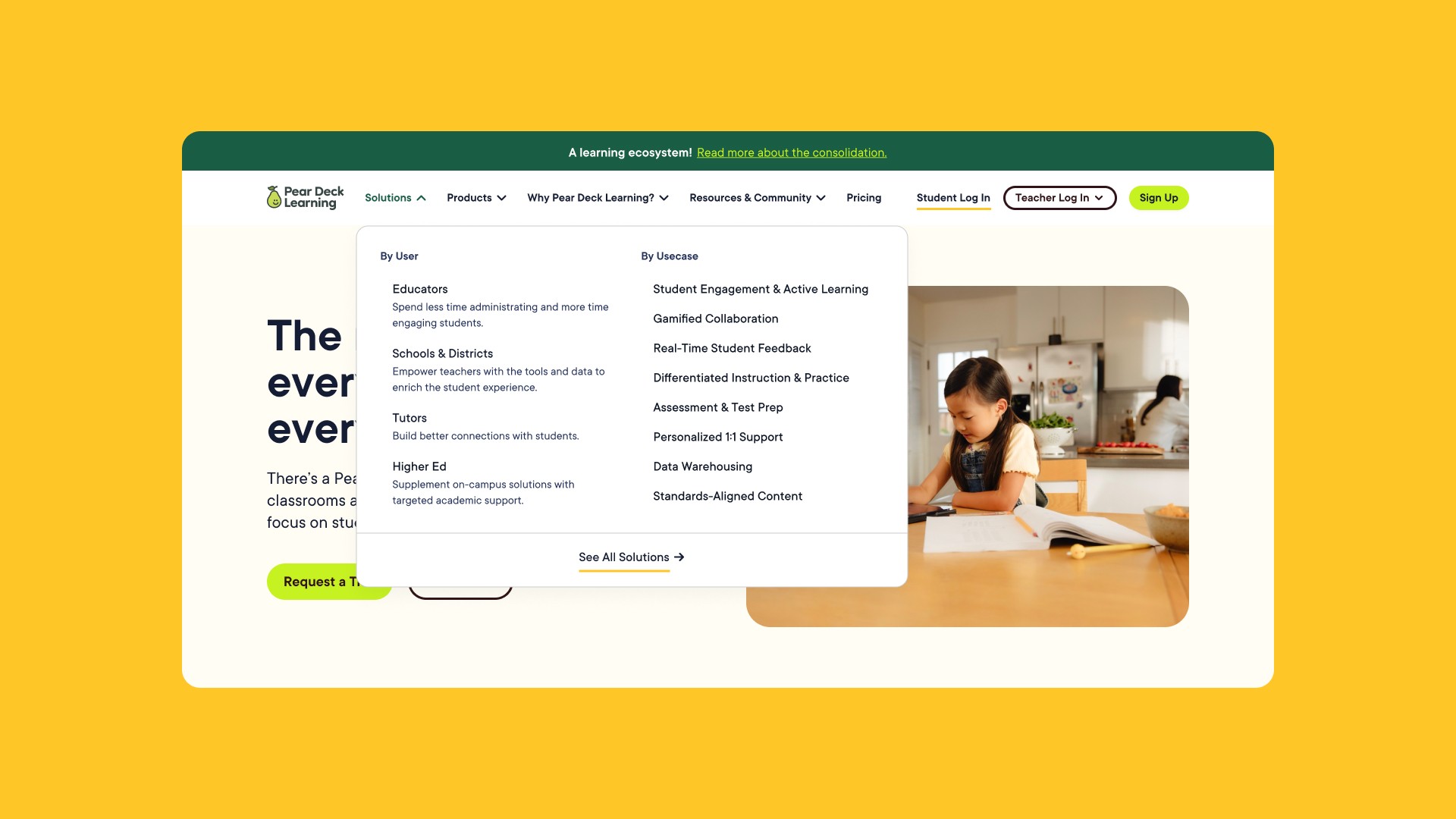
We built it as two axes over the same content. Products live under Products. The same destinations are re-indexed under Solutions by use case — test prep, gamified collaboration, real-time feedback, differentiated practice.
A third cut by persona (Educators, Schools & Districts, Tutors) gives each persona their own door. Same rooms, three ways in.
A current Pear Deck user just needs a login. An administrator evaluating the whole ecosystem arrives with a specific problem to solve, not a product name. Test prep. Student engagement. Dead practice time.
One navigation, two different behaviors.
We built it as two axes over the same content. Products live under Products. The same destinations are re-indexed under Solutions by use case — test prep, gamified collaboration, real-time feedback, differentiated practice.
A third cut by persona (Educators, Schools & Districts, Tutors) gives each persona their own door. Same rooms, three ways in.


How we delivered
How we delivered
Because IA was the hero of the work, we gave it its own phase before anything else started. Information architecture and UX planning ran as a self-contained first sprint, against unbranded product data, while the identity system was still in progress.
By the time brand assets landed — four to five weeks late — the sitemap, content model, and wireframes were already signed off. The three week-long page design sprints that followed were executing against a structure we'd already defended.
Because IA was the hero of the work, we gave it its own phase before anything else started. Information architecture and UX planning ran as a self-contained first sprint, against unbranded product data, while the identity system was still in progress.
By the time brand assets landed — four to five weeks late — the sitemap, content model, and wireframes were already signed off. The three week-long page design sprints that followed were executing against a structure we'd already defended.
What shipped
What shipped
Four marketing sites collapsed into one. A portfolio that had previously competed against itself became unified as a platform.
And the test we care about most: the system has continued to absorb product additions without a redesign. Pear Start, the AI lesson-planning product introduced after launch, slotted into the existing IA as a new node in Products and a new entry in the Use Case axis. No re-architecture. The navigation still holds.
Four marketing sites collapsed into one. A portfolio that had previously competed against itself became unified as a platform.
And the test we care about most: the system has continued to absorb product additions without a redesign. Pear Start, the AI lesson-planning product introduced after launch, slotted into the existing IA as a new node in Products and a new entry in the Use Case axis. No re-architecture. The navigation still holds.